

Puppy Toilet Training at night
Potty training your new puppy with a nighttime routine is extremely important, although it can be one of the hardest parts of training your dog. That’s why we’ve put together this handy guide on how to toilet train your puppy at night, so you can use these simple tips to avoid sleepless nights and uncontrollable mess!
Looking for the general method? Our complete guide to house training a puppy covers the full routine, day and night.
Setting a nighttime routine for your puppy
Establish a regular bedtime and wake up time
A routine can be a powerful tool when training your puppy, teaching them when they can use the toilet and when they should be asleep. Start by creating a schedule with your dog and try to maintain consistent times for when you both go to sleep and when you wake up, teaching your puppy when it’s the right time for them to use the bathroom.
Use the ‘last call’ system before bed
Before going to bed at night, give your puppy a “last call” and allow them one last chance to use the toilet before you go to sleep. After your puppy has done their business and begins to calm down, place them where they sleep, either in their crate or in their bed. It’s a great way of teaching your puppy that it’s time to calm down and go to sleep and also reduces the chance of them making a mess on your furniture during the night.
Take them out during the night, but only for the first few months
It’s important to understand that young puppies will need to use the toilet at least once during the night. So, for the initial few weeks, make sure you set an alarm during the night to let your puppy use the bathroom (usually around 6 hours after their last potty break). If your puppy doesn’t have an accident during those hours for a few weeks, start to increase the time between their last toilet break before bed and you taking them out at night. Delaying their potty break by 15 minutes every night will teach them to wait a little longer to do their business, eventually turning it into a morning routine.
Once your puppy is three or four months old, they will most likely be able to go the full night (7 to 8 hours) without a toilet break.
Get them up and out each morning
First thing in the morning, take your dog outside so they can once again do their business. Doing this as soon as they wake every day helps set a consistent routine and teaches your puppy to expect the toilet in the morning.
How to avoid accidents in the middle of the night
Taking your puppy outside to do their business in the middle of the night is crucial when your puppy is at a very young age and there are bound to be a few accidents in the process. That being said, it may not always be feasible to take your dog out at crazy hours of the night and certainly isn’t a long term solution.
That’s when using a real grass dog toilet like Piddle Patch can really come in handy. It’s a great way to avoid accidents in the middle of the night and is also a fantastic way of training your puppy to do their business when they’re outside the house.
Controlling your puppy’s diet
Controlling when your puppy eats and drinks can help reduce the chances of your dog needing the toilet in the middle of the night. Try to avoid feeding your puppy for at least 2 hours before their bedtime, allowing most of their food to be digested prior to their final potty break before bedtime. It helps to limit water intake in the hour before bed too, just don’t cut it off too early in the evening, your puppy still needs to stay properly hydrated through the day.
What to do if an accident happens
Accidents will still happen sometimes, especially in the first few weeks, and how you handle them matters more than the accident itself. Clean the area thoroughly with an enzymatic cleaner rather than a standard household cleaner, ordinary products can leave a faint trace behind that actually draws your puppy back to the same spot. Take a moment to think through what led to it, were they given enough chances to go, or were the signs missed, rather than assuming the whole routine has failed. One accident doesn’t undo the progress you’ve already made.
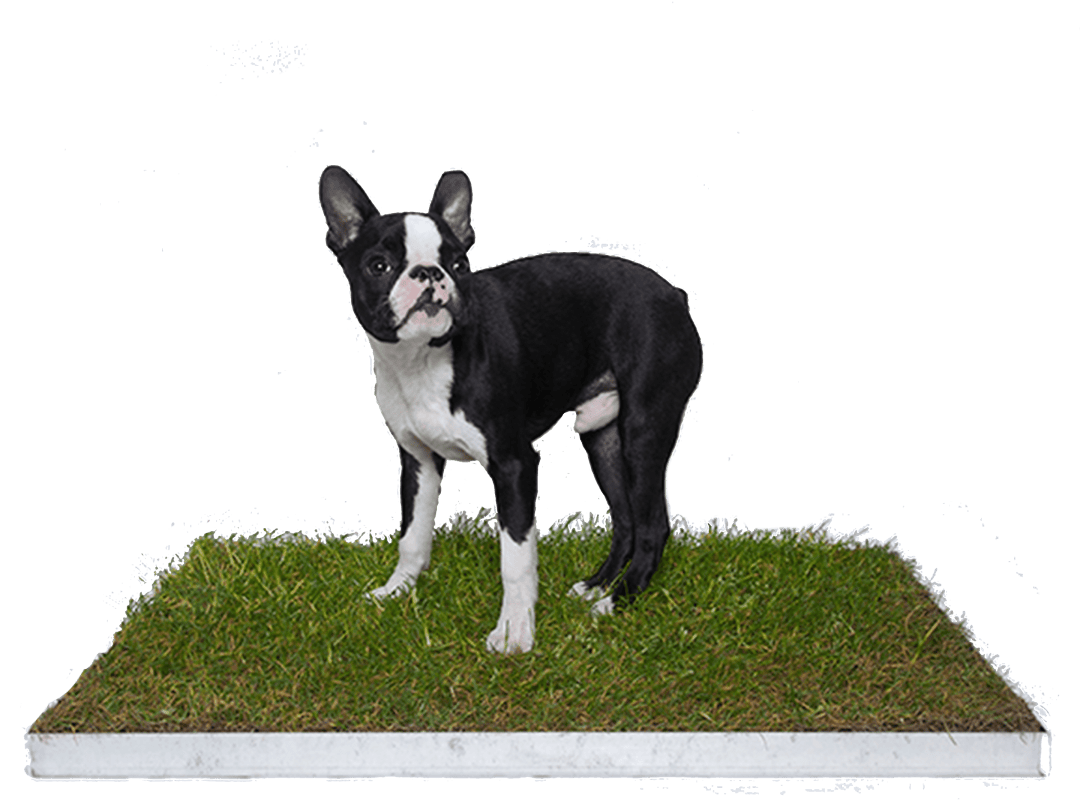
Give them a reliable spot for the night
A real grass dog toilet, like a Piddle Patch, set up somewhere accessible overnight, takes the guesswork out of the middle-of-the-night dash.
6 more tips to potty train your puppy at night
Over time, following the above guidance can work wonders for you and your puppy. However, we know it’s not always so straight-forward and sometimes a little extra help can be really useful when trying to potty train your dog or puppy.
If you’ve followed all of the usual advice and guidance and are still struggling to toilet train your puppy, give the following tips and tricks a go and see how you get on:
If your puppy keeps having accidents at night, give them more frequent toilet breaks. It’s very important that a puppy never feels forced to do their business where they sleep. If they are not taken to the toilet regularly enough, they are much more likely to have an accident during the night and may even pick up a few bad habits in the process. Setting more regular alarms to take them out more frequently during the night can work wonders, especially during those first few weeks while they start to develop a routine.
Prepare for accidents before they happen. Sometimes, simple changes like moving your puppy’s bed closer to the door can make a huge difference in the case of an emergency.
Make sure your puppy is ready for sleep. A good amount of exercise during the day should have your puppy feeling exhausted by bedtime, making them much more likely to sleep for longer stretches, resulting in less need for the toilet.
Avoid playing with your puppy just before their bedtime. Getting them excited before you put them to bed will make them much less likely to sleep. Instead, focus on calming your puppy down in the hours leading up to bedtime.
Wake your puppy before they wake you. This reduces the chance of them whining and scratching during the night and places you in control of when they can and can’t use the bathroom.
Have fun! While potty training your new puppy, remember that it’s a journey where there will be some accidents and sleepless nights. This is all a completely normal part of having a puppy! So when it gets tough, just remind yourself that it won’t be forever and that with perseverance, your pup will be a potty pro in no time.
Not just for puppies
Night-time accidents aren’t only a puppy problem. If a previously reliable adult or older dog suddenly starts having accidents at night, it’s worth considering what’s changed, incontinence, a urinary tract infection, or another age-related condition, stress or anxiety from a change in the household, or a shift in feeding or walk times throwing off their internal clock. An indoor toilet can work just as well as a temporary or permanent solution for an older dog as it does for a puppy, especially once stairs or a long walk to the garden have become difficult. Our guide on transitioning an older dog to Piddle Patch covers this in more depth.
FAQs
Will using an indoor toilet at night confuse my dog?
Not if the training is clear and consistent. Dogs are adaptable, and plenty are successfully trained to use an indoor spot at night and the garden during the day without any confusion between the two.
Won’t an indoor dog toilet make my home smell?
Not if it’s looked after properly. Choose a well-ventilated spot, change the grass or clean the toilet regularly, and any odour stays minimal, no worse than a garden lawn.
Isn’t using an indoor toilet just for owners who don’t want the hassle?
Not at all. It’s a practical way to protect your own sleep and your puppy’s, and to make the early weeks of training less stressful for both of you. That’s a sensible choice, not a shortcut.
What should I do if my puppy has an accident at night?
Clean the area with an enzymatic cleaner to remove any trace scent, then think through whether they were given enough chances to go before assuming the routine isn’t working. One accident doesn’t mean starting over.
A good night’s sleep is possible
Toilet training at night is one of the more exhausting parts of the early weeks, but it doesn’t last. Stick with a consistent routine, respond calmly to the occasional accident, and give your puppy a reliable spot to go, and most puppies settle into sleeping through the night within a few weeks to a couple of months. If night-time turns out to be a genuinely different challenge for an older or rescue dog, our other guides cover those situations in more depth.
Real grass, delivered to your door
Grown in the UK, harvested to order, and ready the moment your dog needs somewhere dependable to go. Pick the option that fits how you want to buy.
Starter Pack
£58.95
Your first patch plus the non-chew tray, so the setup is sorted in one go.
Subscription
from £28.95
Every 1–4 weeks, cancel any time. New subscriber discounts available.