
the real reasons, explained
If you’ve ever caught your cat calmly nibbling a houseplant, a tuft of garden grass, or a patch of grass indoors, you’ve probably wondered the same thing most cat owners eventually do: why does an obligate carnivore, an animal that needs meat to survive, spend part of its day eating grass?
The short answer is that it’s completely normal, and it isn’t really one behaviour with one cause. Vets and animal behaviourists point to several overlapping reasons, and most cats are doing a bit of all of them.
01
It helps them bring up what they can’t digest
Cats can’t digest plant cellulose. When a cat eats grass, it often triggers vomiting a short while later, and that’s frequently the point, not a side effect. Grass is thought to help cats bring up things they’ve swallowed but can’t process, most commonly fur from grooming. A cat that grooms itself several times a day is swallowing a steady trickle of loose hair, and grass appears to help move that along, either by working it through the gut or by prompting it back up before it can form a blockage.
02
It may help move things through the gut
Not every grass-eating session ends in vomiting. Some vets suggest the fibre in grass also acts a bit like a mild laxative or intestinal cleanser, helping keep digestion moving generally, not just clearing hairballs but supporting normal gut motility.
03
It’s an instinct carried over from wild ancestors
Wild and feral cats have been observed eating grass too, including big cats. One theory is that grass supplies trace nutrients, folic acid in particular, which supports red blood cell production and isn’t abundant in an all-meat diet. Another is that grass-eating in the wild helps expel intestinal parasites, since a cat that’s caught and eaten a rodent or bird may also have ingested worms along with it. Either way, the behaviour seems to predate domestication rather than being something modern house cats invented.
04
It’s satisfying in its own right
Plenty of vets and behaviourists also point to something simpler: some cats just seem to enjoy it. Chewing and grazing on grass gives an indoor cat something to do, a bit of texture, a bit of foraging behaviour, a break in the day. For cats with little outdoor access, that enrichment value matters on its own, separate from any digestive benefit. For cats with little outdoor access, that enrichment value matters on its own, separate from any digestive benefit. If you’d rather grow your own supply than rely on whatever’s outside, here’s how to grow cat grass indoors.
When is grass-eating normal, and when should you watch more closely?
For the vast majority of cats, nibbling grass now and then, with or without an occasional bit of vomiting afterwards, is unremarkable. It’s such a common behaviour that most vets consider it a non-issue by default.
That said, it’s worth paying attention if:
• Your cat is vomiting frequently, not just occasionally after a grass session
• Grass-eating suddenly increases a lot, or appears alongside other new symptoms (lethargy, appetite changes, weight loss)
• Your cat seems to be eating grass compulsively rather than casually
None of these automatically mean something is wrong, but a change in pattern is generally the more useful signal than the behaviour itself. If in doubt, it’s always worth a quick check with your vet, who can rule out anything else going on and confirm it’s just your cat being a cat.
The safety question: garden grass vs. houseplants
If your cat has outdoor access, chances are they’re already eating grass from the garden, and for most gardens, that’s low-risk in itself. The real risk isn’t grass, it’s what might be on it: lawn treatments, pesticides, slug pellets, or grass growing near a road. Cats can’t tell treated grass from untreated grass, so if you use anything on your lawn, it’s worth checking how long you need to keep pets off it.
Indoor cats without outdoor access sometimes redirect that same instinct toward houseplants instead, which is where things can get genuinely risky, since a number of common houseplants are toxic to cats. Giving an indoor cat a safe, dedicated patch of real grass to explore gives that instinct somewhere appropriate to go, without the guesswork of what’s growing in the garden or what’s sitting on the windowsill.
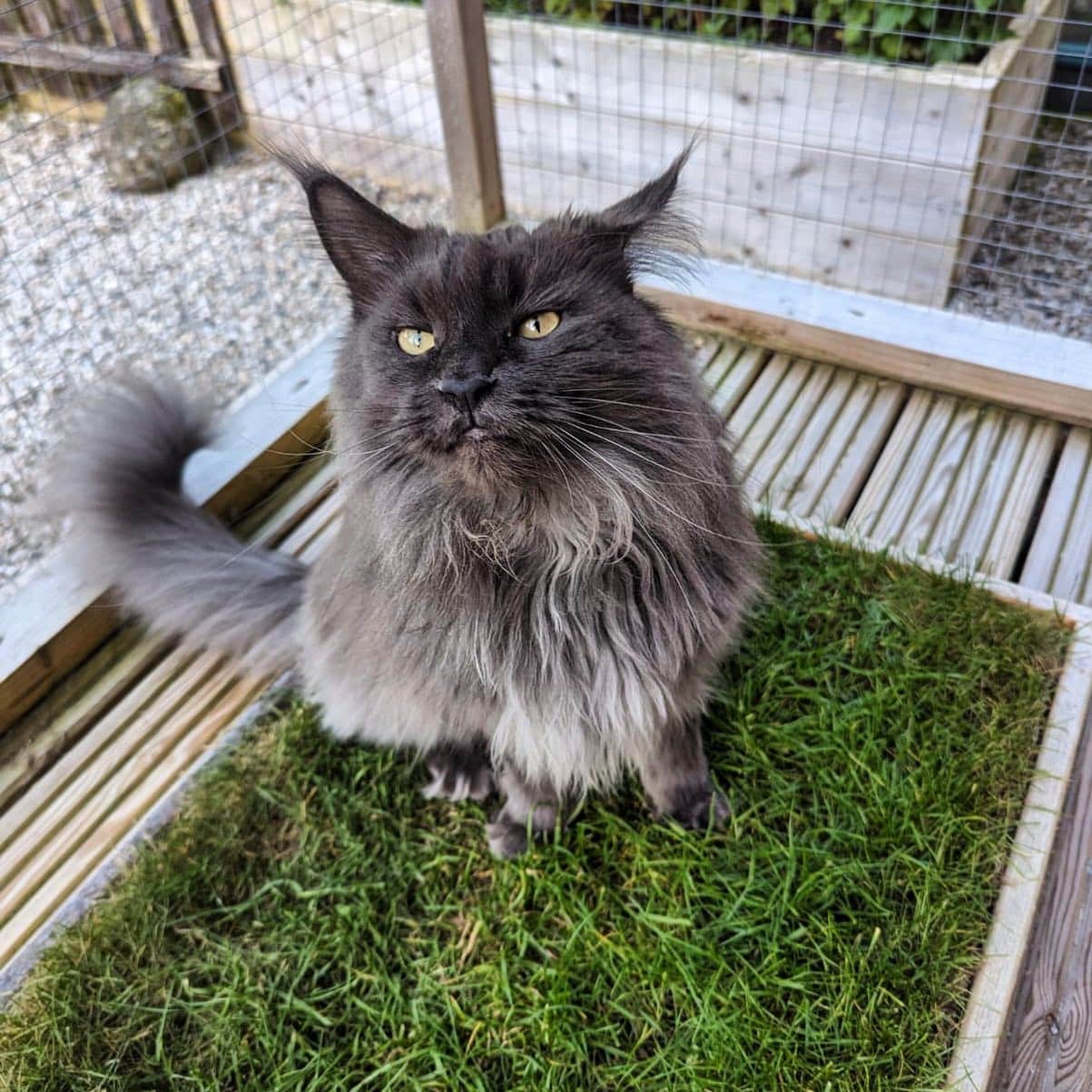
That’s the idea behind Purrfect Patch: a patch of real, soil-free, pesticide-free grass your cat can dig into, scratch at, rest on and explore indoors. It’s built as an enrichment surface rather than a food source, so if your cat gives it the occasional curious nibble the way cats do with grass generally, there’s nothing on it to worry about, but the point of the patch is the safe surface itself, not something designed to be eaten.
It’s a particularly good fit for indoor and city cats who don’t get much outdoor access at all, giving them a natural, grass-based outlet for digging and exploring without ever needing to leave the flat.
FAQ the questions cat owners actually ask
Is it bad for my cat to eat grass?
No. For most cats, eating grass now and then is completely normal and not a sign of a problem. It’s one of the most common behaviours in both indoor and outdoor cats. It’s only worth flagging to your vet if it becomes frequent, compulsive, or starts alongside other symptoms like lethargy or weight loss.
Does eating grass mean my cat has an upset stomach?
Not necessarily. Grass-eating is often linked to bringing up hairballs or supporting normal digestion, but plenty of cats graze on grass simply because they enjoy it, with no digestive complaint involved at all.
Why does my cat throw up after eating grass?
Cats can’t digest the cellulose in grass, so it often comes back up shortly after eating it. This is thought to be part of the point in many cases, helping clear hair or other material the cat has swallowed but can’t process.
Is garden grass safe for cats to eat?
Untreated garden grass is generally fine. The main risk is anything applied to it: pesticides, lawn feed, or slug pellets, none of which a cat can distinguish from untreated grass. If your lawn (or your neighbours’) is treated, or you’re not sure, giving an indoor cat a dedicated, pesticide-free patch removes the guesswork.
What’s the difference between grass and catnip for cats?
Grass is something cats chew and, in small amounts, swallow, for the reasons above. Catnip is a different plant entirely. Cats don’t eat it so much as roll in and sniff it, and it triggers a short-lived, playful reaction in cats that are sensitive to it. The two aren’t interchangeable, and plenty of cats respond to both for very different reasons. If you want the full side-by-side comparison, here’s cat grass vs. catnip.
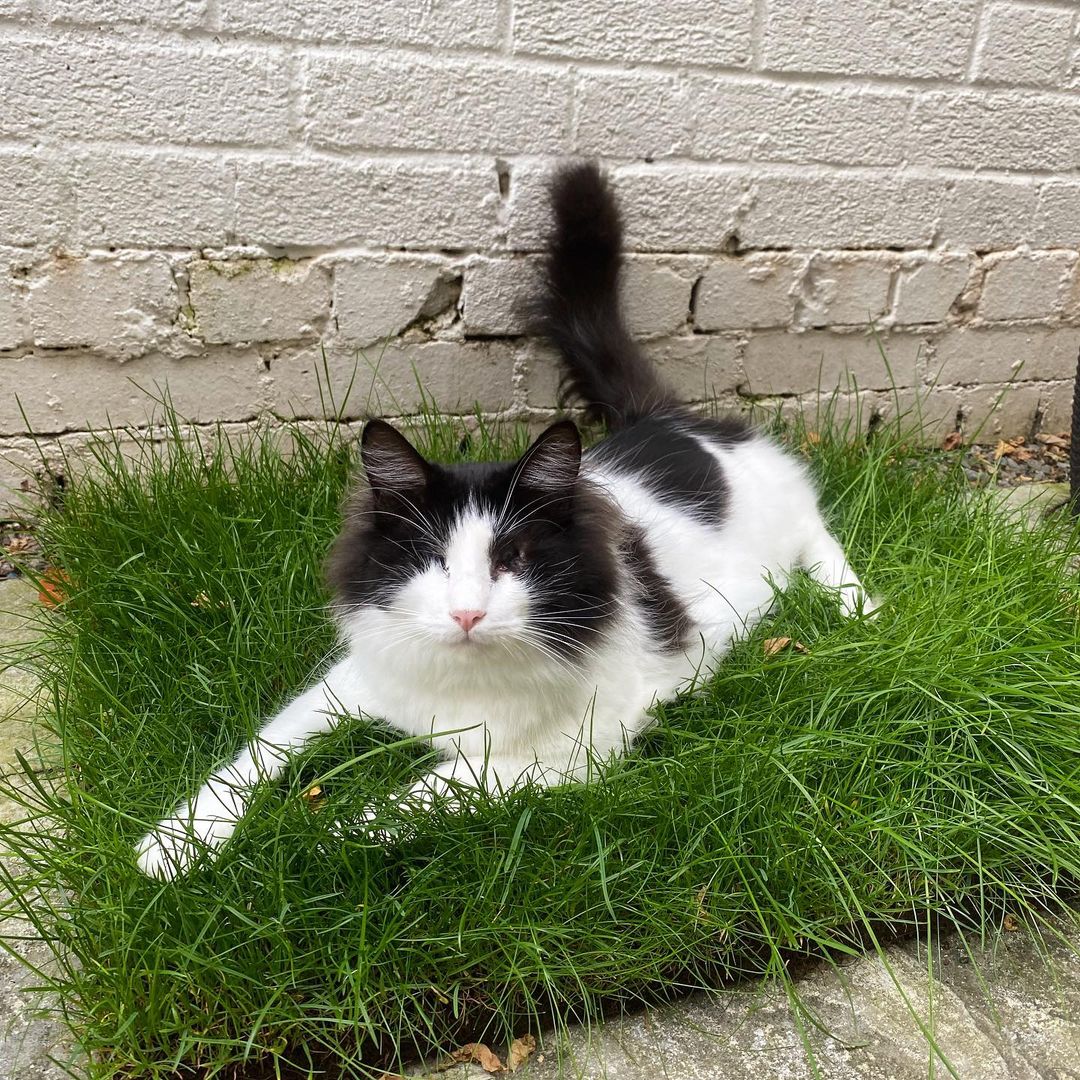
Real grass, indoors somewhere safe to dig, scratch and rest
Purrfect Patch is a patch of real, soil-free, pesticide-free grass, grown in the UK and posted to your door.