
step by step
Cat grass is one of the easiest things you can grow at home. No garden required, no green thumb needed. If your cat likes to graze, and most cats do, for good reason, a small indoor patch means they always have something safe to chew, without relying on whatever’s growing outside.
Here’s how to do it properly, start to finish.
What you’ll need

Seed
Most “cat grass” sold for this purpose is a blend of wheat, oat, barley or rye grass. Any of these is fine on its own, or a mix. Avoid anything labelled purely ornamental.

A shallow tray or pot
Doesn’t need to be deep, since cat grass has short roots. A wide, shallow container works better than a tall narrow one.

Growing medium
Ordinary potting soil works, though soil-free options (coir, or a pre-made growing pad) are tidier indoors and less likely to end up scattered across the floor by an enthusiastic cat.

Water and a sunny-ish windowsill
Step by step six steps, about ten days
1
Fill your tray with about 2 to 3cm of growing medium, levelled off but not packed down hard.
2
Scatter the seed reasonably thickly and evenly across the surface, thicker than you’d sow a lawn, since a dense little patch is what you’re after, not spaced-out blades.
3
Cover lightly with a thin layer of medium, just enough to tuck the seed in, then water gently so you don’t wash it all to one side.
4
Keep it moist, not soggy, and place it somewhere it’ll get a few hours of light a day. A windowsill out of harsh direct midday sun is usually ideal.
5
Expect the first shoots in 2 to 4 days, with grass long enough to graze on within about a week to ten days.
6
Keep the cat away until it’s established. A fresh tray of loose seed and damp soil is exactly the kind of thing a curious cat will dig into and ruin before it’s had a chance to grow. Somewhere temporarily off-limits works best for the first week.
Keeping it going keep two trays on rotation
Cat grass isn’t a one-and-done patch. Once your cat starts grazing it, it’ll get chewed down and eventually stop regrowing well, usually after a few weeks. At that point, the easiest approach is to have a second tray already a week or two behind the first, so there’s always one ready to take over. Rotating two trays means your cat never runs out, and you’re not stuck resowing under pressure every time one gets eaten down.
A few other things worth knowing:
• Trim it back occasionally even if your cat isn’t eating all of it, to keep it from getting straggly.
• If it starts to yellow or smell musty, it’s usually overwatering. Let it dry out a bit between waterings.
• Cat grass isn’t the same as catnip. Grass is for chewing; catnip is a different plant entirely that cats respond to by sniffing and rolling rather than eating.
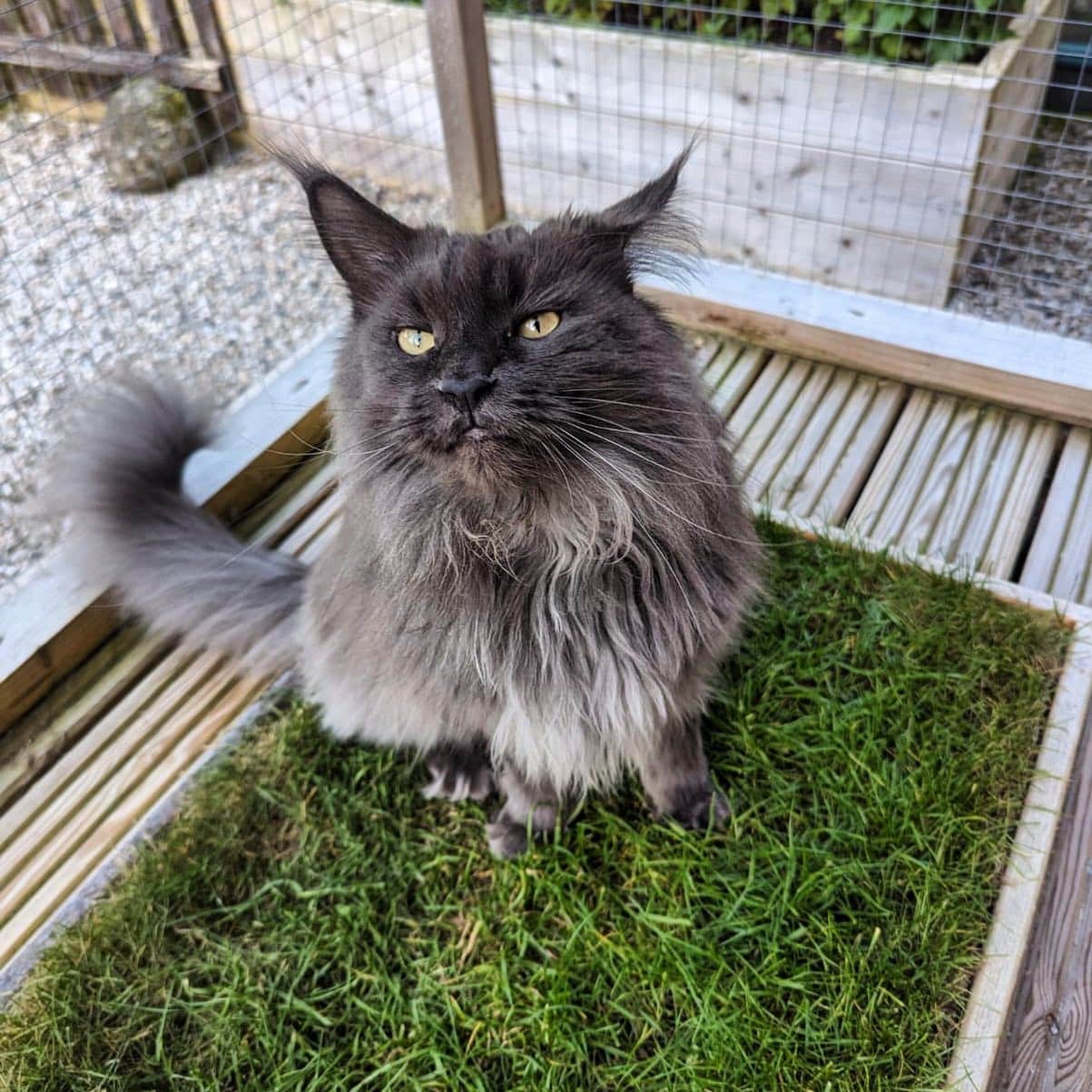
Beyond grazing: giving your cat somewhere to dig and explore
Growing your own patch is specifically about giving your cat something to chew, and it’s genuinely worth doing if that’s what you’re after. Separately, some owners also like giving their cat a dedicated surface for digging, scratching and general exploring indoors, alongside any grass they graze on. That’s a different job, and it’s what Purrfect Patch is designed for: a patch of real, soil-free, pesticide-free grass built as an enrichment surface, not a food source. The two can happily sit side by side if your cat enjoys both kinds of grass time.
FAQ
How long does it take for cat grass to grow?
You’ll usually see the first shoots within 2 to 4 days, with grass long enough for your cat to graze on within about 7 to 10 days, depending on light and warmth.
Can I use regular grass seed for cat grass?
It’s best to use seed specifically sold as cat grass (typically wheat, oat, barley or rye) rather than lawn grass seed, which can be treated with chemicals not meant for pets to eat.
How often do I need to resow cat grass?
Once a patch has been grazed down, it tends to stop regrowing well after a few weeks. Most people keep two trays going on a rotation, one established and one just starting, so there’s always fresh grass available.
Is cat grass the same as catnip?
No. Cat grass is a food-safe grass that cats chew and eat. Catnip is a completely different plant that triggers a short, playful reaction in sensitive cats through smell rather than eating.
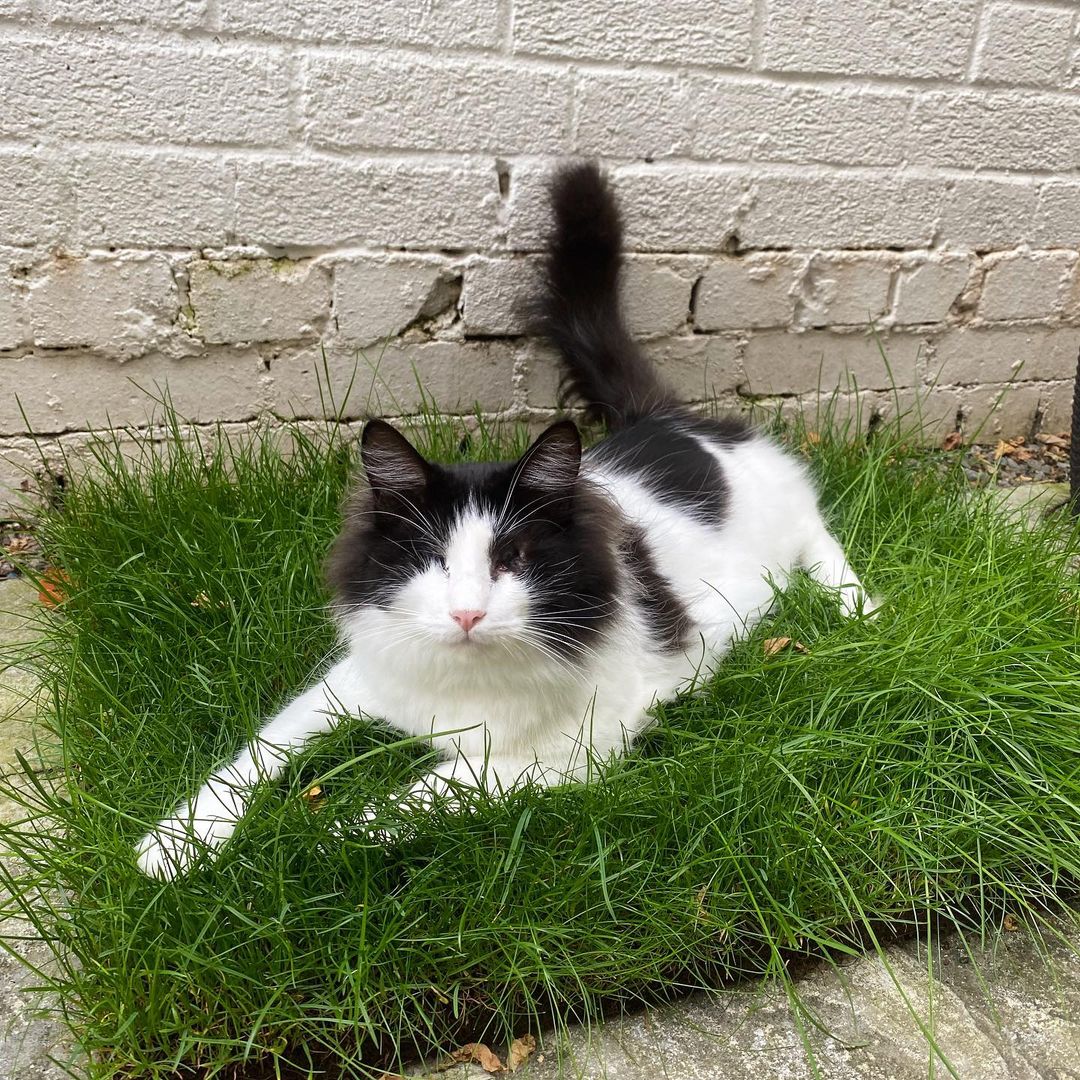
Real grass, indoors somewhere safe to dig, scratch and rest
Purrfect Patch is a patch of real, soil-free, pesticide-free grass, grown in the UK and posted to your door. £33.95.